Stem Cell Therapy for Meniscus Tears: Hope Beyond Surgery

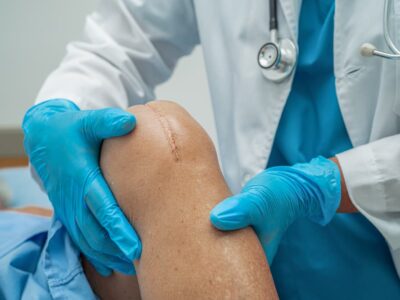
A meniscus tear can look deceptively simple on paper. Two crescent-shaped pads of cartilage sit between the femur and tibia, one on each side of the knee, and when one tears, the diagnosis often sounds tidy. In real life, it rarely feels tidy. Patients describe a sharp twist while getting out of a car, a pop during a pickup basketball game, or a dull ache that slowly turns into catching, swelling, and a growing loss of confidence on stairs. The meniscus does more than cushion the knee. It helps distribute load, absorb shock, stabilize motion, and protect the joint surface from wear. When it is injured, the entire knee can start to behave differently.
For decades, the standard conversation around meniscus tears has centered on three broad options: wait and rehab, trim the torn portion surgically, or repair it if the tear pattern and blood supply allow. Those remain important tools. But many patients now ask a different question, especially if they hope to avoid surgery or have been told their tear sits in a gray zone: can Stem Cell Therapy help?
The honest answer is nuanced. There is genuine scientific interest in regenerative treatments for meniscal injuries, and some patients do report meaningful improvement in pain and function after biologic procedures. At the same time, the evidence is still evolving, results are not uniform, and the term "stem cell" is often used too loosely in marketing. Hope is reasonable. Hype is not.
Why meniscus tears are so frustrating to treat
The meniscus has a limited blood supply. That single detail shapes nearly every treatment decision. The outer portion, sometimes called the red-red zone, receives better blood flow and has a better chance of healing, whether naturally or after surgical repair. The inner portion, often referred to as the white-white zone, has poor circulation. Tears there tend to heal poorly.
That matters because not every tear is the same. A small vertical tear in a younger athlete is very different from a complex degenerative tear in a 58-year-old with early arthritis and years of kneeling work behind him. One knee may lock because a flap catches mechanically. Another may hurt mostly after long walks, with swelling the next morning. One patient needs to pivot and sprint for work or sport. Another simply wants to garden, climb stairs, and sleep without throbbing.
Traditional treatment works well in many cases, but each path has trade-offs. Physical therapy can reduce pain and improve mechanics, especially when surrounding muscles are weak or movement patterns have deteriorated after injury. Surgery can be highly effective when the knee is truly mechanically blocked, or when a repairable tear in the right location deserves preservation. Yet partial meniscectomy, which removes damaged tissue, also removes some of the meniscus' protective function. That can increase joint stress over time. Surgeons know this, which is why many are more conservative now than they were 15 or 20 years ago.
This is the space where regenerative medicine has gained attention, not as magic, but as an attempt to preserve tissue, reduce inflammation, support healing, and perhaps postpone or avoid surgery in selected patients.
What Stem Cell Therapy usually means in orthopedic practice
One of the biggest sources of confusion is terminology. In everyday clinic conversation, "Stem Cell Therapy" often refers to procedures using bone marrow aspirate concentrate, sometimes abbreviated BMAC, or cells derived from adipose tissue. These preparations may contain a mixture of cells, including mesenchymal stromal cells, growth factors, platelets, and signaling molecules. They are not the same as laboratory-expanded stem cells grown in culture, which are subject to different regulatory standards and are not routine in most orthopedic practices.
That distinction is important. A patient may hear "stem cells" and imagine a purified, highly standardized product with guaranteed regenerative behavior. The reality is less dramatic and more biological. Most orthopedic biologic injections are complex concentrates harvested from the patient, processed the same day, and injected into the injured area under imaging guidance. Their effects likely come from a combination of signaling, immune modulation, and support of the healing environment, not from a straightforward process of growing a brand-new meniscus inside the knee.
In practical terms, a physician may draw marrow from the pelvis, process it, and inject the concentrate into or around the meniscal tear, sometimes along with platelet-rich plasma. Some clinics prefer one approach over another based on training, available equipment, or interpretation of the literature. The procedures are usually outpatient. Sedation may or may not be used. Ultrasound or fluoroscopy often guides placement.
That does not make the treatment ineffective. It simply means patients should understand what is actually being offered.
Where the science stands right now
Research on Stem Cell Therapy for meniscus tears is promising, but it is not settled. Small clinical studies, case series, and early trials suggest that biologic injections may improve pain and function in some patients with meniscal pathology. Imaging in certain studies has hinted at tissue change or signs of healing, though MRI interpretation can be tricky and does not always match symptoms. A patient can feel much better without a perfectly normal scan, and a scan can look somewhat improved while the knee still behaves poorly.
The strongest evidence remains limited by small sample sizes, variable treatment protocols, mixed patient groups, and inconsistent outcome measures. Some studies include patients with concomitant arthritis, which muddies the picture because improved symptoms may result from reduced inflammation in the joint rather than true meniscal healing. Others combine procedures, making it difficult to isolate the effect of the cell-based treatment itself.
From a clinician's perspective, this means two things can be true at once. First, regenerative treatment may be a reasonable option for carefully selected patients. Second, no responsible practitioner should promise that a torn meniscus will regenerate fully or that surgery can always be avoided.
A useful way to frame it is this: the evidence supports consideration, not certainty.
The patients most likely to ask about it
The people who inquire about Stem Cell Therapy tend to fall into a few familiar groups. Some are younger and active, with a tear that is symptomatic but not clearly headed for surgery. Some are middle-aged patients with a degenerative tear who have already tried rest, anti-inflammatory measures, and standard therapy, but are wary of losing meniscal tissue through arthroscopic trimming. Others have persistent pain after prior surgery and want to know whether a biologic treatment might calm the joint and improve function.
Not every patient in those groups is a good candidate. A locked knee from a displaced bucket-handle tear often needs prompt orthopedic evaluation because the mechanical block itself may require surgery. Likewise, a severely arthritic knee with diffuse joint space loss, alignment issues, and multiple pain generators may not benefit much from a meniscus-focused injection. The biology of the tissue matters, but so does the structure of the knee.
The strongest candidates often share a few features:
- Pain localized to a known meniscal injury, without severe mechanical locking
- Mild to moderate structural damage rather than advanced arthritis
- A willingness to commit to rehabilitation after the procedure
- Realistic expectations about symptom improvement versus true tissue regrowth
- Care from a clinician who uses imaging guidance and offers a clear diagnosis
Even within that group, response varies. Age, tear pattern, activity level, body weight, alignment, prior surgery, and coexisting cartilage damage all influence outcome.
What the treatment process actually looks like
Patients often imagine a single injection and a quick return to https://codywejq596.quillnesty.com/posts/stem-cell-therapy-for-shoulder-injuries-a-modern-approach normal. Most clinicians who work with biologics would describe a more deliberate process. The evaluation matters as much as the procedure itself.
A good workup starts with history and physical exam. The clinician should understand how the injury occurred, what movements provoke pain, whether swelling comes and goes, and whether the knee truly locks or just feels stiff. MRI is usually part of the picture, but MRI findings have to be interpreted in context. Plenty of adults have degenerative meniscal changes on imaging that are not the main source of pain.
If a biologic procedure is chosen, the treatment day may involve a marrow draw from the iliac crest, processing of the sample, and image-guided injection into the knee. The patient usually goes home the same day. Soreness for several days is common, both at the harvest site and in the knee. Recovery protocols vary, but activity is rarely unrestricted right away. Most clinicians limit high-impact loading early, encourage progressive motion, and pair the procedure with structured physical therapy.
That rehabilitation piece is easy to underestimate. If the quadriceps are weak, the hip stabilizers are underperforming, and the patient returns immediately to twisting loads, the biologic injection has little chance to shine. In practice, better results usually come when the procedure is part of a broader strategy that restores movement quality, muscle support, and sensible progression.
What patients can reasonably expect
Pain relief is the most realistic short-term goal. Better function, reduced swelling, and greater confidence with walking, stairs, and daily activity often matter more to patients than what the MRI shows six months later. Some feel improvement within weeks, while others progress slowly over two to three months. A subset notices little benefit.
When the treatment helps, the change is often described as less aching after use, fewer episodes of swelling, and improved tolerance for exercise. Athletes may notice sharper cutting or deep squatting still provokes symptoms even after general improvement. That is not failure. It reflects the fact that a high-load knee is a demanding environment.
The harder conversation concerns structural healing. Can Stem Cell Therapy make a torn meniscus whole again? Possibly in some cases, to some degree, but that should not be sold as the default outcome. Meniscal tissue has limited healing capacity, especially in the inner zones, and regenerative interventions must work within that biological constraint.
Patients also need to know that symptom relief does not always last indefinitely. Some do well for a year or more. Others regress if they return to heavy loading too aggressively, gain weight, develop worsening arthritis, or simply have a tear that never becomes stable enough.
How it compares with surgery
The usual comparison is not between Stem Cell Therapy and all surgery. It is between biologic treatment and a specific surgical recommendation.
If a surgeon believes the tear is repairable, especially in a younger patient with a peripheral tear and a stable knee, repair may offer the best chance to preserve meniscal tissue. In that scenario, a biologic injection may be supplementary or experimental, not necessarily a substitute.
If the recommendation is partial meniscectomy for a degenerative tear in a middle-aged adult without locking, the picture becomes more complex. Several studies over the last decade have shown that many degenerative meniscal tears improve with nonoperative care, including targeted therapy, without immediate surgery. For that patient, a biologic procedure may be worth discussing if symptoms persist after standard conservative management.
The trade-offs are practical as well as medical. Surgery usually offers a clearer pathway when mechanical symptoms are obvious. It also carries anesthesia exposure, surgical risk, recovery time, and the possibility of removing tissue the knee would have preferred to keep. Stem Cell Therapy is less invasive, but it can be expensive, often is not covered by insurance, and may not solve the problem. When it works, it can spare an operation. When it does not, surgery may still remain on the table.
A seasoned knee specialist rarely frames this as ideology. The better question is simple: what problem are we trying to solve in this particular knee?
The financial and regulatory realities
This is where patients need a steady hand. Regenerative medicine sits in a commercial environment full of bold claims, glossy websites, and very uneven quality. Prices for Stem Cell Therapy vary widely by region, clinic, and technique. It is not unusual for patients to pay thousands of dollars out of pocket. Insurance coverage remains limited in many settings because evidence, while promising, is not yet robust enough for broad reimbursement.
Regulation adds another layer. Not every product marketed as a stem cell treatment has the same scientific basis or oversight. Same-day autologous procedures generally occupy a different regulatory category from manipulated or expanded cellular products. Patients do not need to become policy experts, but they should ask what exactly is being injected, how it is obtained, whether imaging guidance is used, and what data support that approach for meniscal injury.
One of the simplest ways to judge credibility is to listen for restraint. A trustworthy clinician explains uncertainty, screens out poor candidates, and discusses alternatives openly. A sales-driven clinic tends to promise broad benefits for nearly every joint problem under the same banner.
Questions worth asking before saying yes
Many people walk into a regenerative clinic after hearing a podcast, watching an athlete testimonial, or receiving a recommendation from a friend. Testimonials are understandable, but they are not the same as evidence. Before proceeding, patients should ask:
- What is the exact diagnosis, and how confident are you that the meniscus is the pain generator?
- What type of cell-based or biologic procedure are you recommending?
- What outcomes do you expect in someone with my age, tear pattern, and arthritis status?
- What is the rehabilitation plan after the injection?
- At what point would you advise surgery instead?
Those five questions reveal a lot. A thoughtful answer usually sounds balanced, not rehearsed.
Cases where it may not be the right move
Some knees need a different answer. A displaced meniscal tear that blocks extension, for example, often requires urgent surgical consideration because no injection will physically move a trapped fragment back into place. Likewise, a patient with major malalignment, bone-on-bone arthritis, and diffuse pain may be disappointed by a meniscus-focused regenerative treatment. In that knee, the issue is larger than a single structure.
Another weak candidate is the patient who wants to buy an injection instead of doing rehab. Biology helps, but mechanics still rule the joint. If the surrounding muscles cannot absorb load, if movement patterns remain poor, or if body weight continues to overwhelm the knee, even a well-executed biologic treatment may underperform.
There is also the issue of timing. Some acute tears improve steadily with several weeks of good conservative care. Jumping immediately to an expensive injection may not always be necessary. In other cases, waiting too long while symptoms persist can lead to deconditioning and a more irritable knee. This is where judgment matters more than algorithms.
A practical example from the clinic setting
Consider two hypothetical patients.
The first is a 32-year-old recreational soccer player who twists his knee, develops joint line pain and swelling, and has an MRI showing a small peripheral longitudinal tear. He has no locking, decent alignment, and healthy cartilage. In his case, the discussion might include a period of guided rehab, possible biologic treatment if symptoms plateau, and a low threshold for repair if instability or persistent pain remains.
The second is a 61-year-old contractor with gradual onset medial knee pain, a complex degenerative meniscal tear, mild varus alignment, and early osteoarthritis. He can still work but swells after kneeling and long days on ladders. Here, Stem Cell Therapy might be discussed not as a miracle for the tear itself, but as one part of a broader strategy to reduce pain and improve function while delaying surgery. His outcome would depend as much on load modification, strength, and arthritis management as on the injection.
Those examples matter because they show the same MRI word, meniscus tear, can point to very different treatment logic.
The future is promising, but patience is part of the deal
Research into orthobiologics is moving quickly. Better patient selection, improved imaging guidance, more standardized preparation methods, and stronger comparative trials will likely sharpen the role of Stem Cell Therapy over time. Tissue engineering approaches for meniscal repair and scaffolding may eventually expand what is possible. For now, the field is in a middle stage, beyond novelty, but not yet defined by unanimous protocols or guarantees.
That middle stage can be frustrating. Patients want certainty. Clinicians want stronger data. Both are reasonable. Yet medicine often advances through precisely these periods, where experience, biology, early evidence, and careful skepticism all have to coexist.
For patients with meniscus tears, the key is not whether regenerative treatment is good or bad in the abstract. It is whether it fits the problem at hand, the goals of the patient, and the full condition of the knee.
Hope beyond surgery, with eyes open
There is real reason for cautious optimism. Stem Cell Therapy has opened an important conversation for people with meniscus tears who want something between passive waiting and the operating room. In selected cases, it may reduce pain, improve function, and buy valuable time. For some, it may help avoid surgery altogether. For others, it may serve as a bridge, not a replacement.
The right approach starts with a precise diagnosis, not a marketing slogan. It requires understanding the type of tear, the condition of the rest of the knee, and the patient's actual demands. It depends on technique, rehabilitation, and honest expectation-setting. And it works best when used by clinicians who are comfortable saying no when the fit is poor.
That is what hope should look like in orthopedic care. Not blind faith, not cynicism, but a careful weighing of options with the long view in mind. For the right knee, at the right time, Stem Cell Therapy may offer exactly what many patients are seeking: a meaningful chance to heal and move forward without rushing straight to surgery.
Denver Regenerative Medicine | Stem Cell Therapy, HRT, Testosterone Clinic
Address: 5040 Corporate Plaza Dr Ste 7, Colorado Springs, CO 80919
Phone number: +17205831648
FAQ About Stem Cell Therapy
What are the negative side effects of stem cell therapy?
Stem cell therapy can cause mild short-term reactions like injection-site pain, fatigue, and low-grade fever. More serious risks include infection, immune system rejection, blood clots, unintended tissue growth or tumors, and severe complications from unproven treatments at unregulated clinics.
What diseases can stem cells cure?
Currently, stem cells routinely and effectively cure specific blood cancers, immune deficiencies, and blood disorders using established bone marrow or cord blood transplants. Most other applications—such as for Parkinson's, diabetes, or heart failure—remain experimental or in clinical trials rather than proven cures.
Do stem cell treatments really work?
Yes, stem cell treatments work, but only for a very specific group of conditions. Hematopoietic stem cell transplants (bone marrow transplants) are fully proven and widely used to treat blood cancers like leukemia and lymphoma. However, commercial stem cell treatments for joint pain, arthritis, and wrinkles are largely unproven, experimental, and costly.