Stem Cell Therapy for Post-Traumatic Injuries
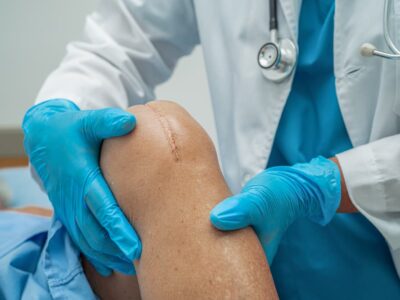
Trauma changes tissue in ways that are easy to underestimate from the outside. A torn tendon, a crushed joint surface, a spinal cord contusion, or a deep muscle injury may all begin with a single violent event, but the biology that follows is rarely simple. Blood supply shifts. Inflammation surges, then lingers. Scar tissue forms quickly because the body values fast closure over perfect reconstruction. Pain can outlast visible healing. Function often returns unevenly.
That is why Stem Cell Therapy has attracted so much interest in the treatment of post-traumatic injuries. The appeal is obvious. Standard care can stabilize fractures, repair ligaments, reconstruct soft tissue, and guide rehabilitation with impressive precision. Yet many patients are left with a gap between healing and recovery. The tissue may be structurally intact, but not truly restored. Cartilage remains thin. Tendons lose elasticity. Nerves regenerate poorly. Muscles atrophy during immobilization and do not fully rebound.
Stem cell-based approaches are being studied and, in selected settings, used with the aim of improving that gap. The central question is not whether stem cells are exciting. It is whether they can reliably improve pain, structure, and function after injury, and if so, for whom, at what point, and with what limitations.
What clinicians mean when they talk about stem cells
The term "stem cell" gets used loosely in marketing, and that has created confusion for patients. In clinical discussions, the phrase usually refers to cells that can self-renew and influence healing either by differentiating into other cell types or, more commonly in current practice, by releasing signaling molecules that affect inflammation, angiogenesis, and tissue remodeling.
For post-traumatic injuries, the cells most often discussed are mesenchymal stromal cells, frequently shortened to MSCs. These cells can be obtained from bone marrow, adipose tissue, and in some research settings from birth tissues such as umbilical sources. Bone marrow aspirate concentrate, often called BMAC, is one of the better-known preparations in orthopedic and sports medicine circles. Adipose-derived cell preparations are also used in some settings, though regulatory standards and processing rules differ by region.
A useful point that often gets missed is that many procedures marketed as Stem Cell Therapy do not involve purified stem cells in the laboratory sense. They may involve concentrates that contain a mixture of cells, growth factors, platelets, and other biologically active components. That does not make them useless, but it does matter when evaluating claims. A patient comparing one clinic to another may think they are shopping among equivalent stem cell treatments when, biologically, the products are quite different.
Why trauma presents a unique challenge
Degenerative disease and traumatic injury overlap, but they are not the same. In a degenerative knee, for example, cartilage thins over years under chronic load and low-grade inflammation. After trauma, tissue damage is often abrupt and layered. The cartilage may shear, the subchondral bone may bruise, ligaments may tear, and the joint may be filled with inflammatory mediators within hours.
That early inflammatory environment can shape the healing response for weeks. In some tissues, especially tendon, ligament, cartilage, and nerve, the body repairs with compromise. The repair is enough to hold things together, but not enough to recreate original architecture. Collagen fibers become disorganized. Cartilage lesions fill with fibrocartilage instead of true hyaline cartilage. Nerve recovery can stall over long distances. The result is familiar in rehabilitation clinics: patients who are technically healed but still weak, stiff, painful, or unable to trust the injured body part.
Stem cell-based strategies aim to modify this environment. Some investigators hope these cells can encourage more regenerative healing and less scar-dominant healing. Others are more modest and focus on reducing harmful inflammation, supporting blood vessel formation, or improving the quality of repair tissue when used alongside surgery.
That distinction matters because expectations should be specific. A person with a badly damaged joint should not assume that a single injection will regrow a pristine articular surface. A patient with a repaired rotator cuff should not expect stem cells alone to overcome poor rehab adherence, smoking, diabetes, or a large chronic tear. Biology can be nudged. It cannot be bullied.
Where Stem Cell Therapy may fit after injury
The most realistic use cases for Stem Cell Therapy tend to sit in the gray zone between acute repair and chronic failure. These are cases where conventional treatment has value but leaves room for biologic support.
In orthopedic trauma, one area of interest is bone healing, particularly delayed union or nonunion. Bone marrow-derived cell concentrates have been studied as adjuncts in difficult fractures because bone healing depends on a coordinated response involving cells, scaffold, blood supply, and mechanical stability. If the fixation is poor or infection is present, no cell therapy will rescue the situation. But when mechanics are adequate and biology is lagging, cell-based adjuncts may help some patients.
Soft tissue injuries are another major area. Tendons and ligaments have notoriously limited blood supply, which partly explains why they heal slowly and often with inferior tissue quality. After traumatic tears or partial ruptures, biologic injections are sometimes considered to support healing, usually in conjunction with unloading protocols and carefully progressed physical therapy. Results remain mixed, but the idea is reasonable enough that it continues to draw serious research.
Cartilage injuries may be the most tempting and the most misunderstood. Focal cartilage defects after trauma can produce years of pain and instability, especially in younger active patients. Surgeons have several established options, including microfracture, osteochondral grafting, and autologous chondrocyte techniques in selected cases. Stem cell approaches have been explored both as injections and as part of scaffold-based surgical procedures. The challenge is that cartilage biology is unforgiving. Even when imaging looks better, the tissue may not behave like native cartilage under load.
Nerve and spinal injuries sit at the frontier of regenerative medicine. There is legitimate scientific interest here, because conventional recovery is often incomplete and the unmet need is enormous. But this is also the area most vulnerable to hype. Small studies, case reports, and experimental protocols exist, yet robust, reproducible clinical benefit remains difficult to establish. When clinics advertise dramatic recovery in severe neurologic trauma, caution is warranted.
Muscle injury, including volumetric muscle loss after severe trauma, is another important area under investigation. Anyone who has managed these injuries knows how hard it is to restore bulk, endurance, and normal tissue architecture once large portions of muscle are lost. This is where combinations of scaffolds, rehabilitation, and cell therapies may eventually be more important than any single injection.
Timing matters more than many people realize
One of the first practical questions in post-traumatic care is timing. Should treatment happen immediately after injury, during surgery, after the initial inflammatory phase, or later if healing stalls?
There is no universal answer. In acute trauma, the body already launches a powerful repair process. Intervening too early may be biologically unhelpful or even disruptive in some contexts. On the other hand, waiting too long can allow scar tissue, chronic inflammation, and maladaptive mechanics to become entrenched.
In experience across musculoskeletal care, the best timing questions are rarely answered by the calendar alone. They are answered by the tissue, the stage of healing, the mechanics of the injury, and the patient’s progress. A repaired meniscus, a delayed tibial union, and a brachial plexus injury are not variations of one problem. They are different biological situations that happen to share the word trauma.
This is also why broad package deals that promise stem cell treatment for nearly every injury should raise concern. Serious clinicians begin with diagnosis, imaging, stability, healing stage, and functional goals. Only then do they ask whether a biologic adjunct makes sense.
What the evidence actually supports
The evidence base for Stem Cell Therapy in post-traumatic injuries is real, but uneven. Some applications have plausible mechanisms and encouraging early or mid-level data. Others remain firmly investigational.
For bone healing, especially in difficult unions, cell-based adjuncts are among the more credible uses because the biology of bone regeneration is better understood and the outcomes are more measurable. Even here, results vary depending on the type of fracture, fixation quality, vascularity, infection status, and how the biologic product is prepared.
For tendon and ligament healing, the literature is mixed. Some studies suggest improved pain or imaging findings, while others show little clear advantage over standard care or other injectables. This inconsistency reflects a familiar problem in regenerative medicine: not all cell preparations are the same, patient selection differs, and outcome measures are often short term.
Cartilage repair research is active and technically sophisticated, but durable clinical success is hard to prove. Patients often feel somewhat better after many interventions aimed at the joint, especially when inflammation is reduced and rehab is optimized. The harder question is whether the cartilage surface is meaningfully restored over years, under real load, in real lives.
Neurologic trauma remains the most experimental domain. There are reasons for hope, especially from preclinical work, but hope and evidence are not interchangeable. Anyone considering stem cell treatment for spinal cord injury, traumatic brain injury, or major peripheral nerve trauma should insist on very clear explanations of what is standard clinical care, what is offered under formal research, and what remains speculative.
The difference between adjunctive care and miracle language
One of the healthier ways to think about Stem Cell Therapy is as an adjunct, not a substitute. In trauma care, mechanics still matter. If a fracture is unstable, it needs stability. If a tendon is fully ruptured and retracted, it may need surgery. If a joint is stiff and deconditioned, no injection replaces months of disciplined rehabilitation.
The strongest programs treat cell therapy as one component in a broader recovery plan. That plan may include imaging-guided diagnosis, surgical repair when indicated, load management, progressive strengthening, gait retraining, nutrition, sleep support, and realistic return-to-work or return-to-sport milestones.
When this is explained well, patients usually understand it. The trouble begins when biology is sold as a shortcut. People with trauma are often desperate to get back to work, back to sport, or simply back to ordinary life without pain. They are vulnerable to claims that bypass complexity. Good medicine resists that pressure.
What patients should ask before agreeing to treatment
A careful consultation should answer practical questions in plain language. If those answers are vague, that is a signal in itself.
- What exact cell-based product is being used, and where is it obtained from?
- Is this treatment standard practice for my injury, or is it experimental?
- What benefit is realistic in my case: pain relief, faster healing, better tissue quality, or something else?
- What are the alternatives, including doing nothing beyond standard rehab?
- How will success be measured over the next three to twelve months?
These questions sound simple, but they cut through most of the ambiguity that surrounds regenerative therapies. A strong clinician should be able to explain the rationale without resorting to slogans.
Safety is not a footnote
Many patients hear that an autologous treatment, meaning one derived from their own body, must therefore be safe. Safer, perhaps, in some respects. Automatically safe, no. Procedural risk still exists. Injections can cause pain flares, bleeding, infection, and damage to nearby structures if poorly performed. Harvesting bone marrow or adipose tissue has its own discomforts and complications.
There are also broader concerns. Cell processing methods differ. Sterility standards matter. The more manipulated a product is, the more regulatory and biological questions arise. With allogeneic products, derived from donors, immunologic and quality-control issues become even more important. In the neurologic space, where some clinics have offered poorly validated treatments, there have been serious concerns globally about inappropriate administration routes and exaggerated claims.
Another safety issue is less dramatic but very common: delayed definitive treatment. If a patient spends months and significant money on a biologic intervention that was unlikely to help, they may lose valuable time for established options. In cartilage lesions, chronic tendon tears, or unstable injuries, that delay can worsen outcomes.
A case pattern seen often in practice
Consider a patient in his forties who sustains a high-grade ankle sprain with cartilage injury after a motorcycle crash. The fracture heals, the ligaments scar in, and he is told that he should be grateful things were not worse. Six months later he still cannot descend stairs comfortably, his ankle swells after activity, and he has lost confidence in uneven ground.
This type of patient often sits in a frustrating middle territory. The injury is not catastrophic, yet it remains life-limiting. A biologic treatment might be discussed, particularly if imaging shows a focal osteochondral lesion or persistent synovial inflammation. But the success of any intervention depends on details: joint alignment, ligament stability, body weight, work demands, footwear, strength deficits up the kinetic chain, and whether pain is primarily mechanical or inflammatory.
In some cases, a targeted biologic procedure combined with a serious rehabilitation block can help. In others, arthroscopy, cartilage-focused surgery, bracing strategy, or simply a more thoughtful loading program turns out to be the real answer. The point is not that Stem Cell Therapy never matters. It is that trauma care punishes oversimplification.
Why results vary so much between patients
Patients often compare stories online and wonder why one person improved dramatically while another saw little change. Part of that variation is ordinary biology. Age, smoking status, diabetes, vascular health, sleep quality, and baseline fitness all influence recovery. So does the injury itself. A clean partial tendon injury behaves differently from a chronic, degenerative, re-torn tendon in a poorly conditioned shoulder.
The treatment variables are just as important. The source of the cells, concentration method, injection technique, use of image guidance, timing relative to surgery, and post-procedure loading plan all affect outcome. Even two clinics using the phrase Stem Cell Therapy may not be delivering comparable interventions.
Then there is the question of what "worked" means. Pain relief at three months is not the same as durable tissue repair at two years. MRI appearance is not the same as restored function. Returning to jogging is not the https://sergiocffi027.theburnward.com/how-stem-cell-therapy-may-transform-pain-management same as returning to contact sport. Careful outcome tracking is still one of the weak spots in many commercial regenerative medicine settings.
The financial and ethical side of the conversation
Most insurance systems do not broadly cover stem cell-based treatments for post-traumatic injuries, particularly when evidence is still emerging. That leaves many patients paying out of pocket, often substantial amounts. Once treatment enters that space, ethical communication becomes essential. Patients deserve to know when they are paying for a therapy with limited but plausible evidence, rather than an established standard with predictable benefit.
Ethics also shows up in how uncertainty is framed. It is honest to say, "This may help with symptoms and possibly with healing quality, but the evidence is mixed and your response may be modest." It is not honest to imply near-certainty, especially in severe injuries or neurologic trauma.
Clinicians who work responsibly in this area tend to be comfortable with nuance. They do not need to promise miracles because they understand that trust is more durable than excitement.
Where the field is likely heading
The future of post-traumatic regenerative care may depend less on isolated cell injections and more on integrated biologic strategies. Cells may eventually be paired more effectively with biomaterial scaffolds, controlled-release growth factors, gene-modulated environments, and precise rehabilitation protocols. Imaging and biomarker tools may improve patient selection so that therapy is targeted to those most likely to benefit.
There is also growing interest in how these therapies interact with the immune system. Trauma is not just structural damage. It is an immune event. Understanding how to shift macrophage behavior, reduce destructive inflammation, and support organized remodeling may prove as important as the cells themselves.
That future is promising, but promising is not the same as settled. The field still needs better trial design, standardized product characterization, longer follow-up, and outcomes that matter to patients rather than just laboratory proxies.
A grounded view for patients and families
The most useful way to approach Stem Cell Therapy after trauma is with guarded optimism. There are credible reasons to study it, and in selected musculoskeletal cases there may be a meaningful role for it as part of a larger treatment plan. At the same time, the field is full of variability, uneven evidence, and aggressive marketing.
If you are evaluating treatment after a traumatic injury, keep the focus on the full picture of recovery.
- Get a precise diagnosis, including the exact tissue involved and the stage of healing.
- Ask whether structural stability, surgery, or rehabilitation has been adequately addressed first.
- Clarify whether the proposed cell therapy is standard care, off-label use, or part of formal research.
- Weigh likely benefit against cost, recovery time, and the risk of delaying better-supported options.
- Choose a team that speaks clearly about limits as well as possibilities.
That approach may feel less glamorous than the language of regeneration, but it is far more likely to lead to wise decisions. Trauma recovery has always required patience, timing, and respect for biology. Stem cell-based treatments may expand what is possible for some patients. They do not erase the fundamentals, and they work best when those fundamentals are taken seriously.
Denver Regenerative Medicine | Stem Cell Therapy, HRT, Testosterone Clinic
Address: 5040 Corporate Plaza Dr Ste 7, Colorado Springs, CO 80919
Phone number: +17205831648
FAQ About Stem Cell Therapy
What are the negative side effects of stem cell therapy?
Stem cell therapy can cause mild short-term reactions like injection-site pain, fatigue, and low-grade fever. More serious risks include infection, immune system rejection, blood clots, unintended tissue growth or tumors, and severe complications from unproven treatments at unregulated clinics.
What diseases can stem cells cure?
Currently, stem cells routinely and effectively cure specific blood cancers, immune deficiencies, and blood disorders using established bone marrow or cord blood transplants. Most other applications—such as for Parkinson's, diabetes, or heart failure—remain experimental or in clinical trials rather than proven cures.
Do stem cell treatments really work?
Yes, stem cell treatments work, but only for a very specific group of conditions. Hematopoietic stem cell transplants (bone marrow transplants) are fully proven and widely used to treat blood cancers like leukemia and lymphoma. However, commercial stem cell treatments for joint pain, arthritis, and wrinkles are largely unproven, experimental, and costly.